


 Leadership in Energy and Environmental Design (LEED) is a suite of rating systems for the design, construction, operation, and maintenance of green buildings, homes and neighborhoods.
Developed by the U.S. Green Building Council (USGBC), LEED is intended to help building owners and operators find and implement ways to be environmentally responsible and resource-efficient. Proposals to modify the LEED standards are advanced and publicly reviewed by the USGBC's almost 20,000 member organizations.
»» Our LEED Initiators
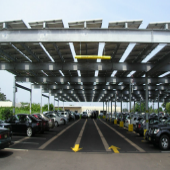
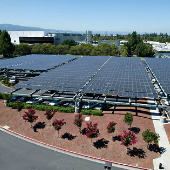
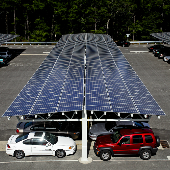
Solar Panels over parking lot.
 Parking lots take up lots of underutilized space. However, thanks to recent structural innovations, the solar power industry has put increasing amounts of that underutilized space to productive use. Installations of parking lot canopies (PLCs) have become an economically viable choice for businesses and institutions weighing renewable energy options. One innovation that has stoked growth in solar power in recent years is development of the elevated structure designed for installation over parking areas. PLCs are being used alone or in conjunction with rooftop and ground arrays of PV panels to create electric generating systems to supplement conventional power sources and reduce reliance on the grid. PLCs make sense when there is limited available rooftop and/or ground area for solar, or when the roof conditions are not suitable for a PV system. Often, the most significant open space available at a given site is the parking lot.
Among the benefits of using parking lots to host solar panels is they create additional space for power generation where there might not have been adequate roof or ground space. In addition, because they are built vertically, over land already in use, they limit the environmental impact on the landscape.
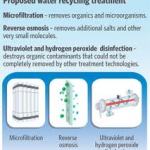
Waste Water Recycling.
 All life is dependent upon fresh, clean water supply. However, the less than two-percent of the entire water supply is available for consumption and use. Cleaning water for reuse is an effective way to maintain water quality and supply.
Recycling conserves fresh water for drinking and other potable uses. It benefits the ecosystem, including plants, fish and wildlife, because less fresh water is removed from streams, rivers and other bodies of water. It reduces the cost to transport water from remote locations and helps maintain water supplies in our underground aquifers. It reduces and prevents pollution by decreasing the waste water discharged to the environment. Sustainability of wetland’s and related ecosystems can be greatly enhanced through the practice of recycling and reusing waste water.
span style="color: #000000;">Recycled water can satisfy most water demands, as long as it is adequately treated to ensure water quality appropriate for the use.
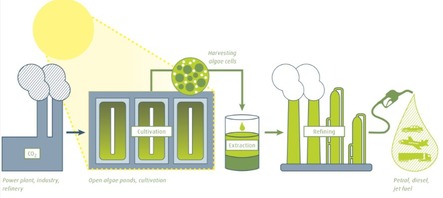
Algae Bio-fuel.
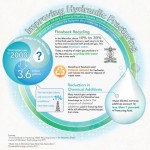
 Algae can convert CO2 into valuable bio-fuels. Special strains can even produce crude oil. Algae-derived products can then be used as an eco-friendly biofuel for cars or as base chemicals for industrial processes. The special abilities of algae are due to their metabolism. During photosynthesis, algal cells convert sunlight, water and CO2 into the energy-rich molecules they need in order to grow. In small quantities, the microorganisms can directly create fats or oils.
Turning CO2 into algal oil-
Geothermal Heating and Cooling System
 Geothermal heat pumps are among the most energy- and cost-efficient heating and cooling systems available today. They use less electricity and produce fewer emissions than conventional systems, reduce air and water pollution, and provide a comfortable indoor environment for building occupants. Nearly 500,000 geothermal heat pumps are being used today for heating and cooling throughout the United States in residential, commercial, and government buildings.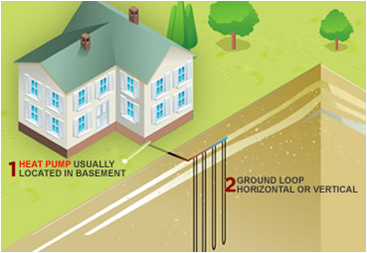
Two Pieces to the Geothermal System
- Heat Pump - the inside unit known as the heat pump>/p>
- span style="color: #000000;">Ground Loop - underground pipes which connect to the heat pump
span style="color: #000000;">»» Winter Operation: The underground pipes, called a ground loop, circulate water which absorbs the heat from the earth and returns it to the indoor heat pump. The heat pump extracts the heat from the liquid then distributes it throughout your home as warm air. With the heat removed, the water is re-circulated to collect more heat from the ground. In this case the loop water is warmer when it comes into the home than when it goes back into the earth since the heat is being removed.
»» Summer Operation: The indoor heat pump takes the hot air from your home and removes the heat. This leaves behind cool air to be distributed through your vents as air-conditioning. The removed heat from the air is rejected into the earth through the ground loop. In this case the water is warmer leaving the home then when it returns since heat is rejected into it.
This is not a new technology, this is not a science experiment, this not rocket science. In fact in many European nations geothermal heating and cooling is the standard. In Sweden and Switzerland more than 75% of new homes have geothermal.>/p>
The EPA has acknowledged geothermal systems as the most energy efficient, environmentally clean, & cost-effective space conditioning systems available.


